 Image 1 of 1
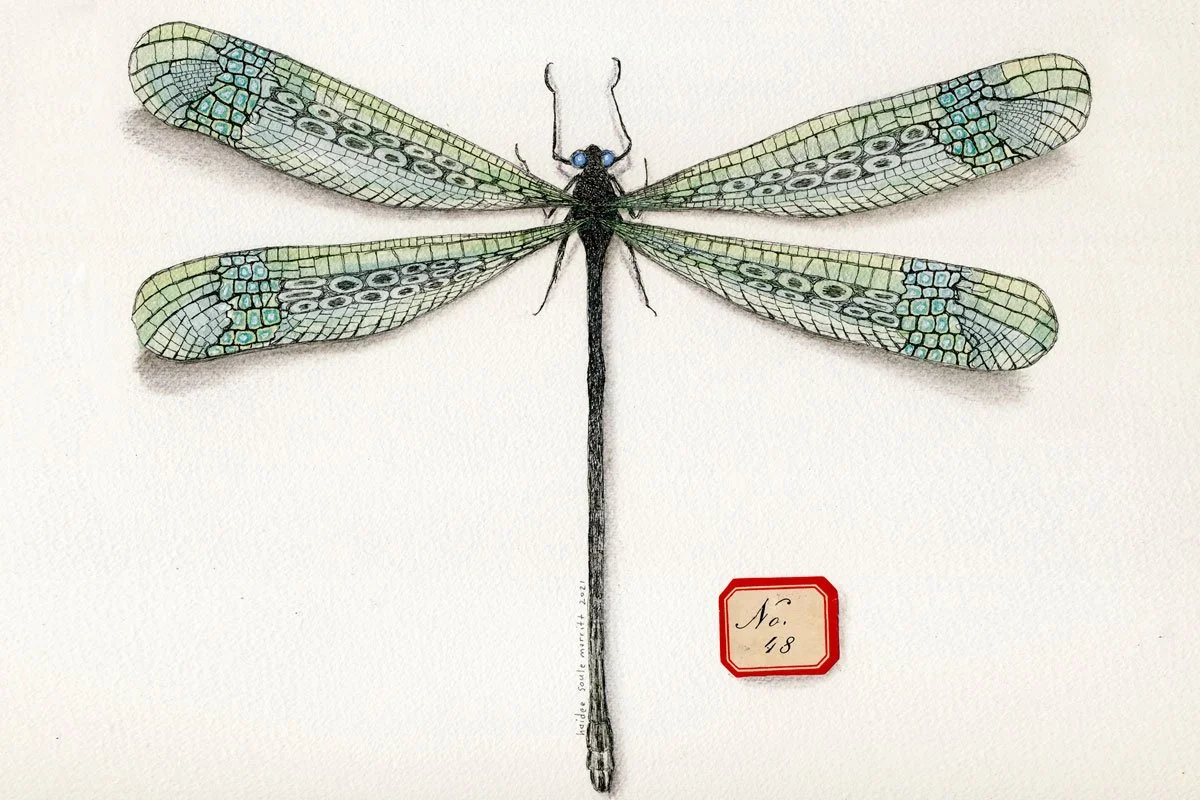
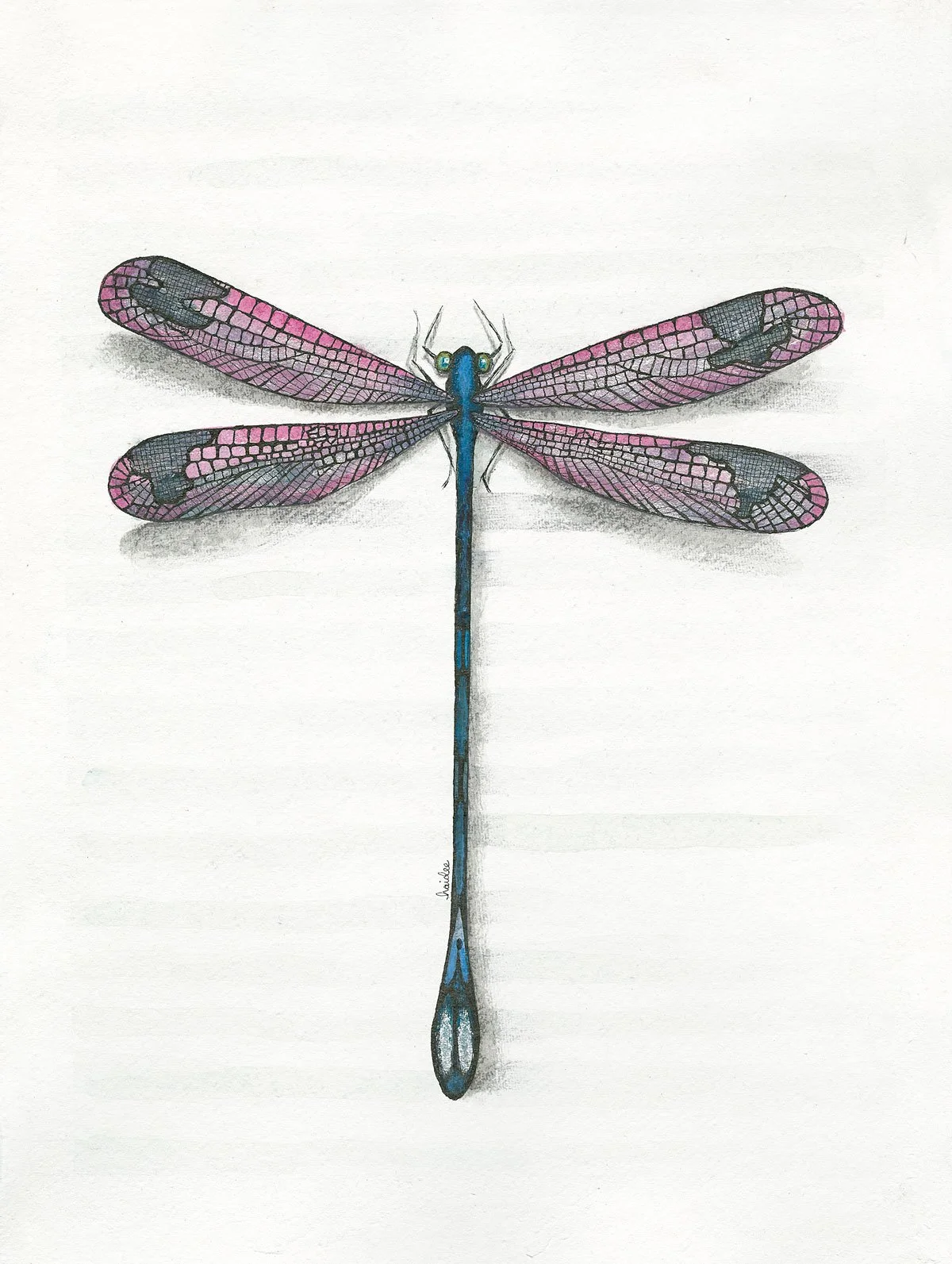
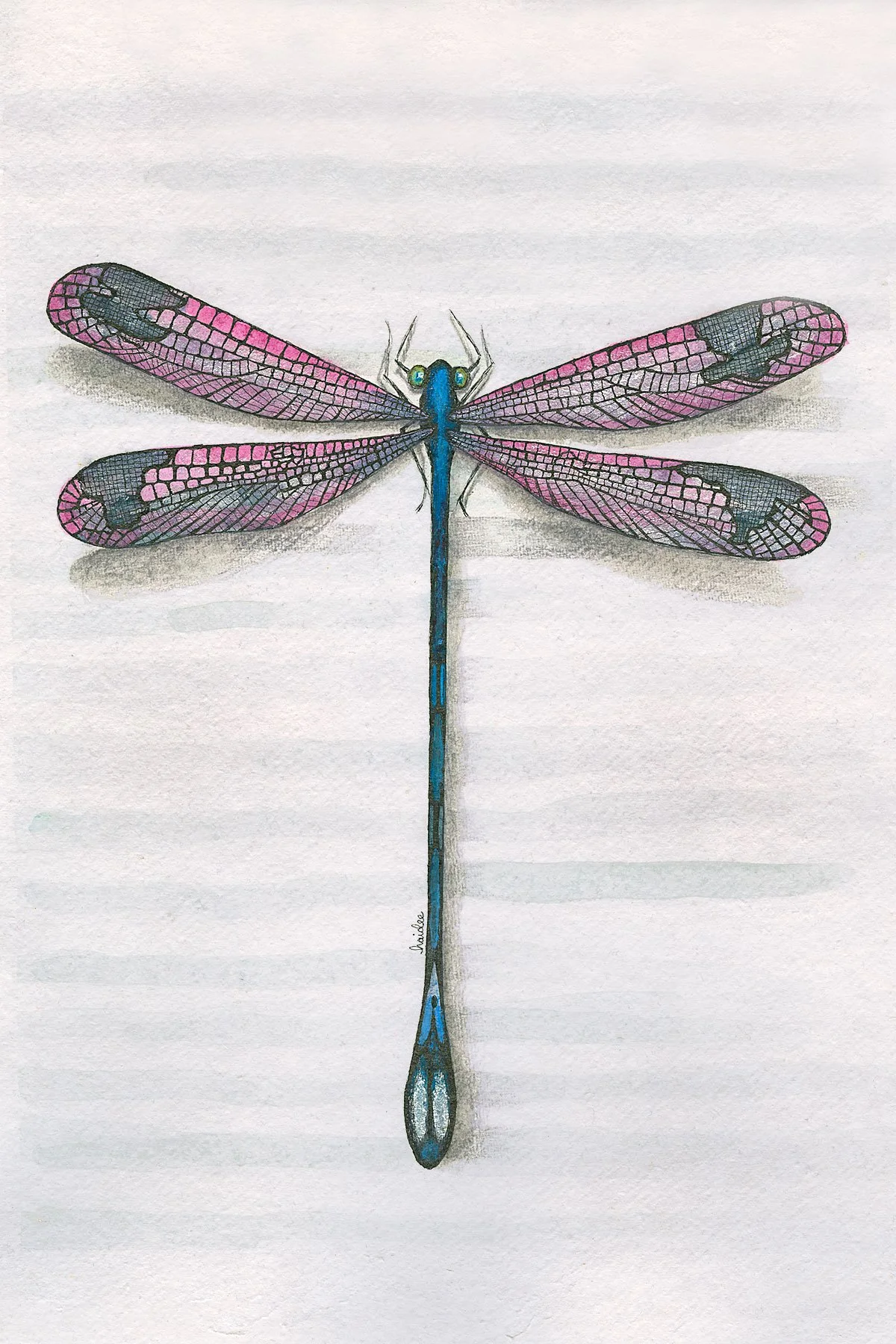
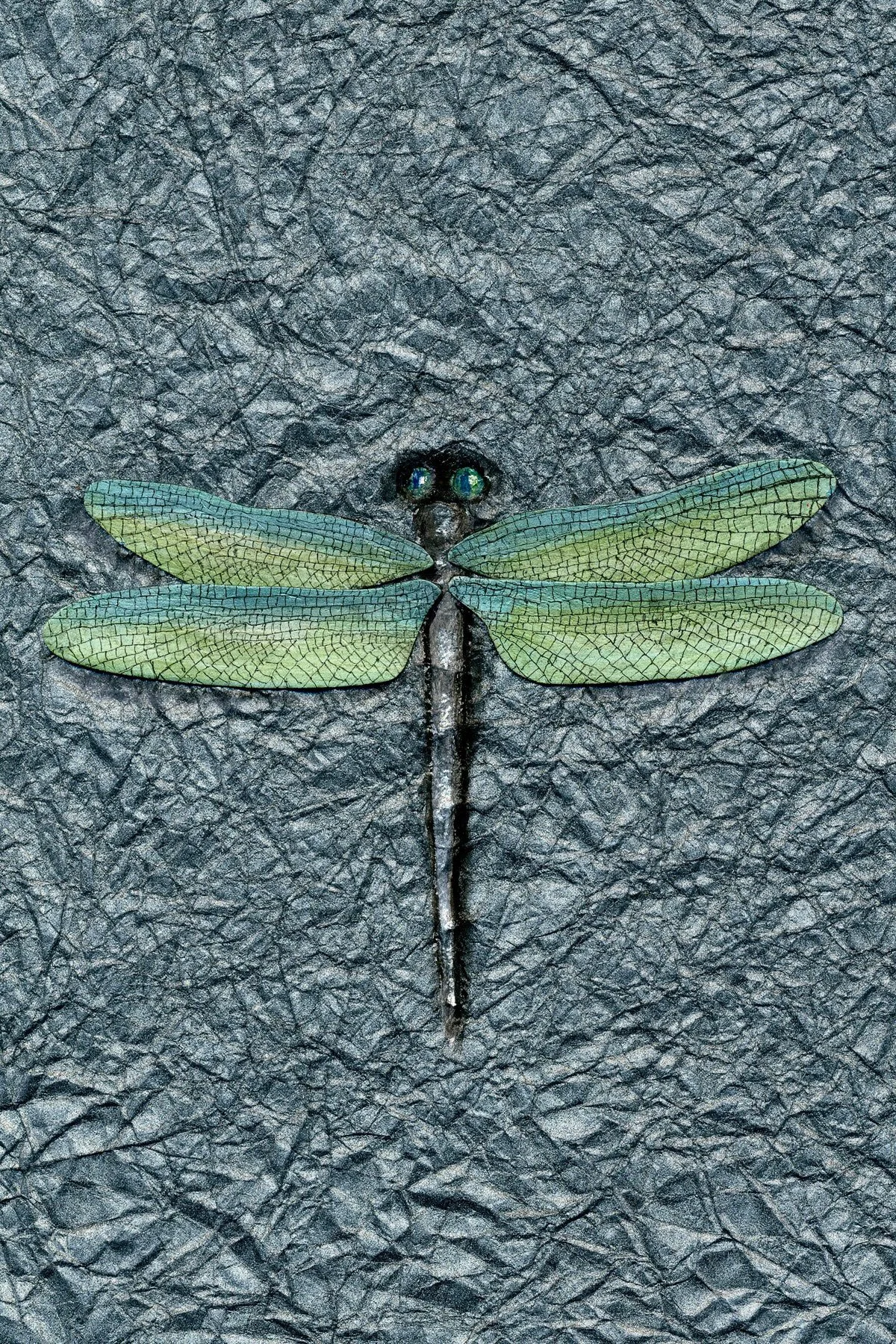
The discovery of Anax foliolatus incarcerum, now catalogued as the Tarnished Verdant, was made serendipitously during the quiet dismantling of a condemned library in Kingston’s storied Portsmouth Penitentiary. The insect had been pressed—accidentally or with intention—between the foxed pages of a forgotten volume, itself bound in a near-metallic cover that echoed the strange sheen of the dragonfly’s wings. The paper had grown brittle, and time had creased it into a strange facsimile of tinfoil, stiff and lustrous, a skin shed by knowledge and neglect. The dragonfly, by contrast, remained intact: flat but whole, as if waiting.
The specimen’s wings—delicately veined with blue and shaded in pale moss and oxidized copper—show signs of asymmetry, most notably in the upper left, which is markedly shorter than its counterparts. Some have speculated this suggests a life of confinement, or perhaps a wound sustained in captivity. Its thorax and tapering abdomen are ink-dark, almost charred, offering little reflection save a thin thread of silver that glints only in certain light. Its eyes, though long since dimmed, retain the faint shimmer of gemstone glass, suggesting a species evolved for dusk rather than daylight.
What is most unusual is the setting in which it was found. There are no documented dragonfly populations residing within the stone confines of Ontario’s prison system. Was it smuggled in by a prisoner, secreted into pages for safekeeping? Or had it entered through one of the barred high windows during a hot northern summer, lured by the glint of sweat and steel, and met its end between the fingers of a reader—or a guard? No one can say. Its presence remains an anomaly, a soft-winged echo of the outside world in a place where even light was rationed.
Fly Design classifies this entry under “Domesticated Shadows,” a small but growing subcategory of insects whose final resting places suggest human proximity and intentional (or accidental) preservation. Whether captive companion or intruding ghost, the Tarnished Verdant now lives on, suspended in archival acetate, its wrinkled backdrop a fitting tribute to the institutional paper that nearly swallowed it whole.
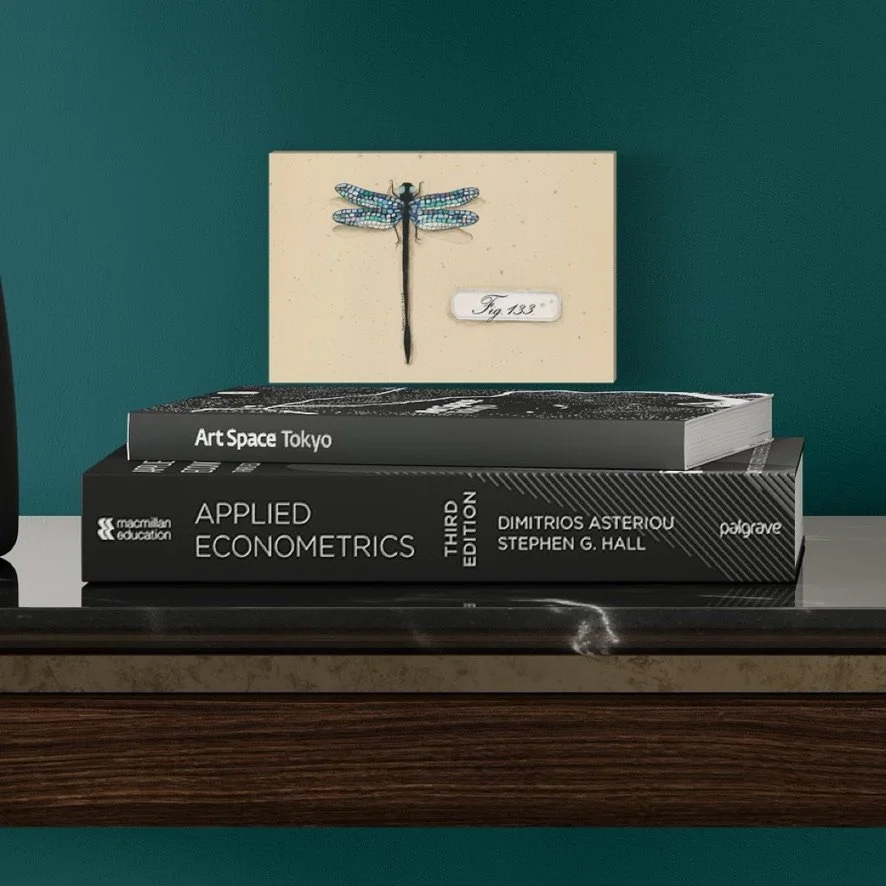
Note: High quality archival glicée print on acid-free paper, a method that creates fine art reproductions with exceptional color accuracy and longevity. Pigments-based inks are designed to resist fading and discoloration and capture the finest details and subtle color variations with great precision.
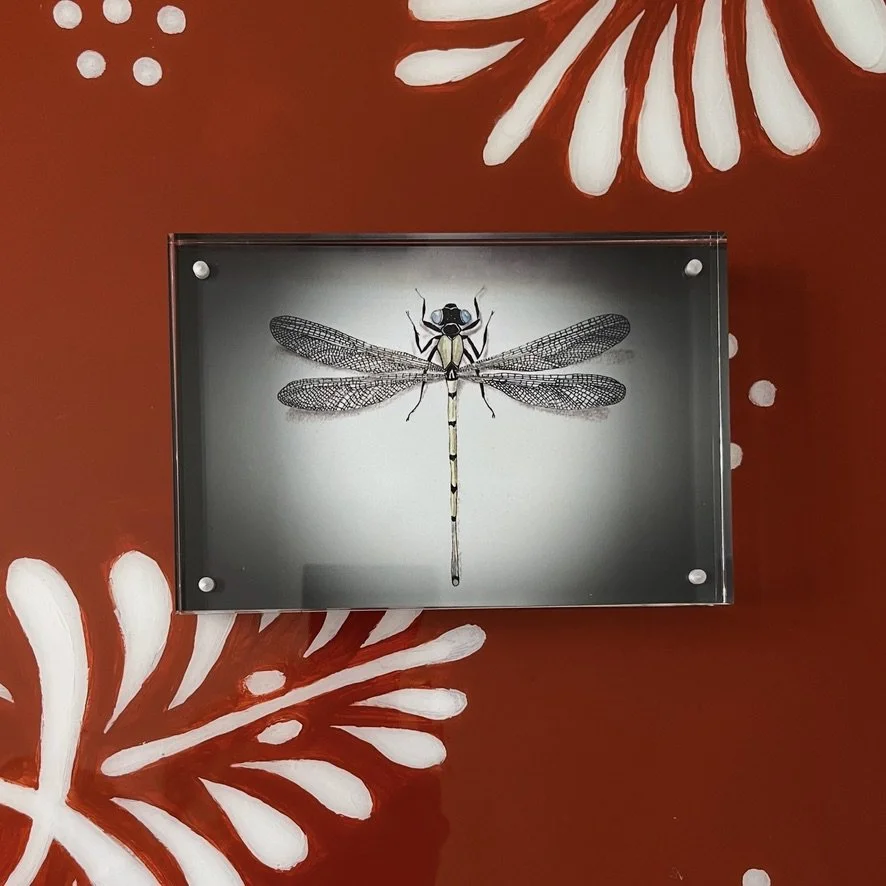
Housed in a 4×6” crystal-clear acrylic specimen block, its 1” depth allows freestanding display. Each piece is designed to exhibit on desk or shelf..
Fly Design uses a practice known as entonology — the study of fictitious insects — to reimagine the natural world through scientific storytelling and poetic design.